Our commitments

Sustainable Portions: Consume Better, Waste Less, For a Healthier Boost
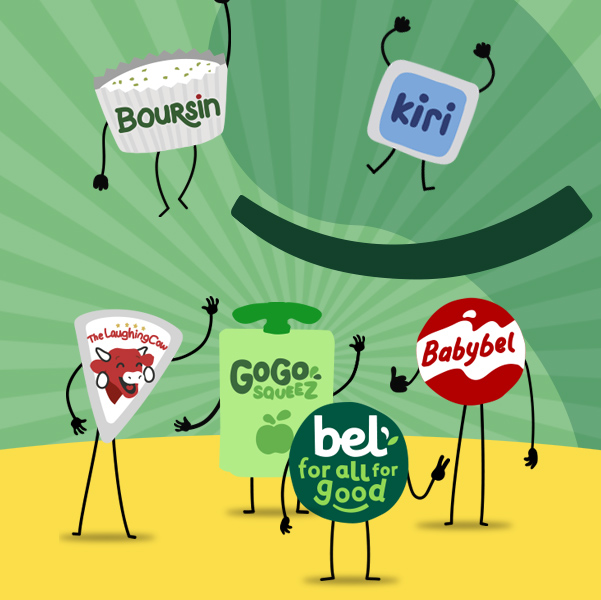
THE PORTION, BEL’S SIGNATURE

The individual portion is at the heart of our model and supports our mission: to offer healthier and more sustainable food for all. It also brings with it the responsibility of implementing a circular and eco-design approach, a strategy that is crucial for meeting current environmental and societal demands. Our goal? To achieve the sustainable portion, both a public health priority and a key lever for reducing environmental impact.

  • The portion helps limit overconsumption by providing the right amount aligned with nutritional needs.
  • It offers a convenient, fun, and easy-to-carry format.
  • It helps make our products accessible to as many people as possible
  • It contributes to reducing food waste compared to family-size packaging where leftovers can easily go to waste
  • It ensures food quality and safety thanks to hermetic sealing

ACTIVELY CONTRIBUTING TO A CIRCULAR ECONOMY

From sourcing to end of the product life cycle, our goal is to actively contribute to a circular economy, whose principles are to reduce waste, keep materials in use, and regenerate natural ecosystems.

We organize our commitments according to the 5Rs, aligned with the Ellen MacArthur Foundation’s butterfly diagram, which illustrates the continuous flow of materials in a circular economy: Refuse – Reduce – Reuse – Restore – Recycle.
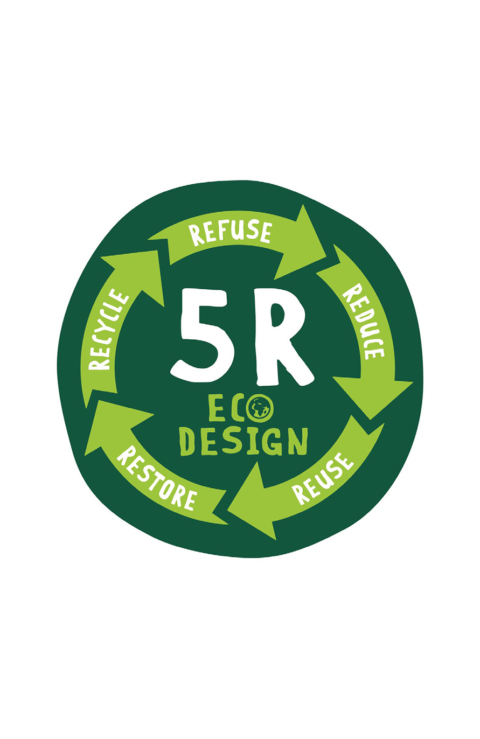
THE SUSTAINABLE PORTION IN 5Rs

REFUSE UNNECESSARY ELEMENTS AND WASTE

Embrace simplicity by avoiding unnecessary packaging and reducing food waste.

REDUCE MATERIAL USE AND FOOD LOSS

Limit our environmental impact through eco-design, production optimization, and individual portions that minimize waste.

REUSE PACKAGING AND REDIRECT WASTE

Promote reusable, refillable, or bulk packaging, and redirect our food losses towards food aid or animal feed.

RESTORE RESOURCES

Preserve resources (land, water, energy) through the choice of renewable, recycled, or certified materials, while actively combating food waste.

RECYCLE PACKAGING AND BY-PRODUCTS
Ensure an optimized end-of-life through effective sorting, value recovery partnerships, and the reintegration of by-products (like whey and cream) into the food chain.

FIGHTING FOOD WASTE

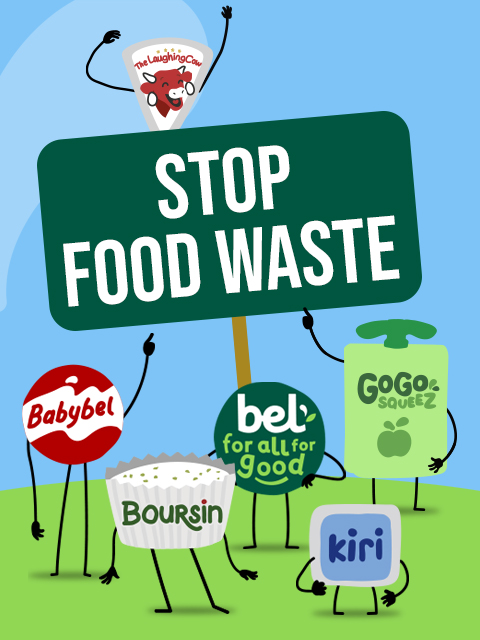
40% of the food produced worldwide is never consumed, generating 10% of greenhouse gas emissions on its own. This is an unacceptable paradox when 1 in 9 people suffer from malnutrition.

At Bel, we take action at every stage of our value chain—from milk collection to final consumption—to fight food waste. Since 2019, we have been a member of the Consumer Goods Forum’s Coalition of Action, and in 2021 we joined the 10x20x30 initiative to reduce our food loss in our operations by 50% by 2030 (compared to 2017)

Our vision is to reduce as much as possible the destruction of edible products and to maximize the valorization of food waste.

A continuous improvement plan is underway to maximize the valorization of our bio-waste.

WE ACT AT EVERY STAGE OF OUR VALUE CHAIN
RAW MATERIALS PRODUCTION

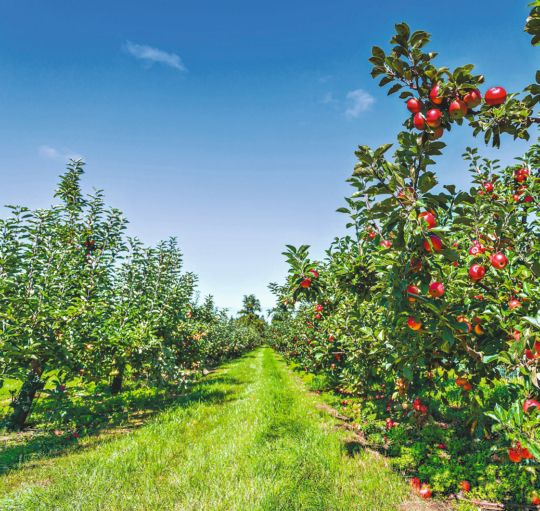
On the farm, we ensure local and regular collection of this delicate ingredient milk to minimize the time between harvesting and processing. Everything is collected, even in cases of production surpluses. We also share best practices with farmers to prevent milk waste on the farm.

In the fruit segment of the Group’s activity, we actively work to prevent post-harvest losses. A large part of our products are made from high-quality fruits that have been excluded from fresh consumption due to their size, appearance, or a mismatch between demand and production.

TRANSFORMATION

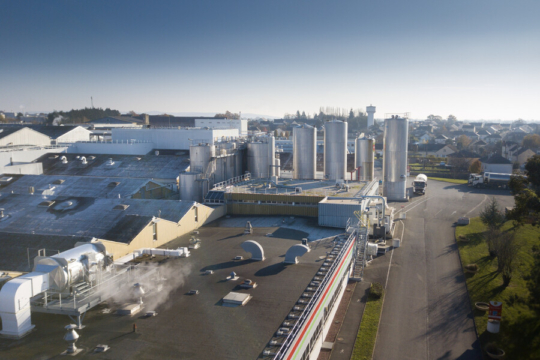
Our factories implement a comprehensive strategy to reduce waste generation. We design our development and manufacturing processes to maintain the taste and safety qualities of our dairy, fruit-based, and plant-based products over extended shelf lives. Our production is precisely adjusted to sales forecasts to avoid any overproduction. Additionally, we valorize every component of the milk collected, turning our production chain into an efficient model in the fight against waste.

DISTRIBUTION

We take concrete actions to achieve zero waste of finished products during transport, storage, and distribution. Our cardboard boxes (logistic units) and pallet configurations are specially designed to protect product integrity until sale. We continuously improve our sales forecasts to avoid stock surpluses and ensure product freshness.

Our active participation in collective initiatives like the Consumer Goods Forum allows us to collaborate with other industry players to transform practices and effectively reduce food waste.

CONSUMPTION

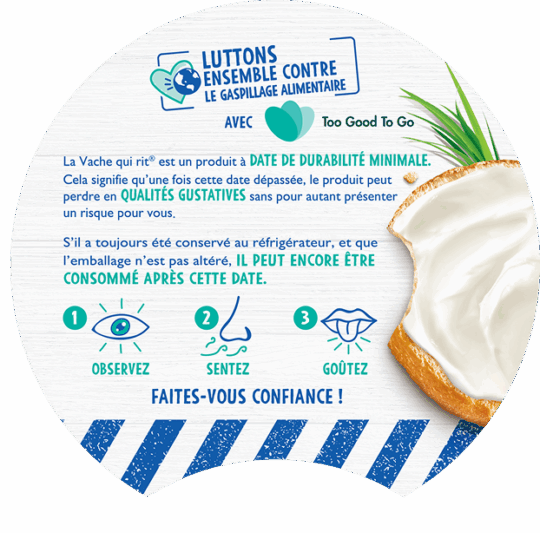
One of the main drivers of household food waste is the misunderstanding of expiration dates, particularly the difference between the Use-By Date and the Best Before Date. Because every action counts, we are actively committed to educating and raising awareness among citizens. Our collaboration with Too Good To Go enabled us to become the first company to include messages on The Laughing Cow® packaging encouraging consumers to look, smell, and taste products before discarding them. This initiative has been extended to the Kiri®, Pom'Potes®, Go Go squeeZ®, Mont Blanc®, and Materne® brands in various countries across Europe and North America.

REDUCE THE IMPACT OF OUR PACKAGING

Although packaging counts for only 5% of the Group’s carbon footprint, we are aware of the environmental challenges linked to the use of individual packaging.

Pour y répondre, nous adoptons une approche d’éco-conception afin de concilier les bénéfices des portions avec une gestion des emballages alignée sur les principes de l’économie circulaire, incluant l’évitement des emballages inutiles, la réduction de l’utilisation de matières, le réemploi lorsque cela est possible, le recyclage et la restauration des ressources.

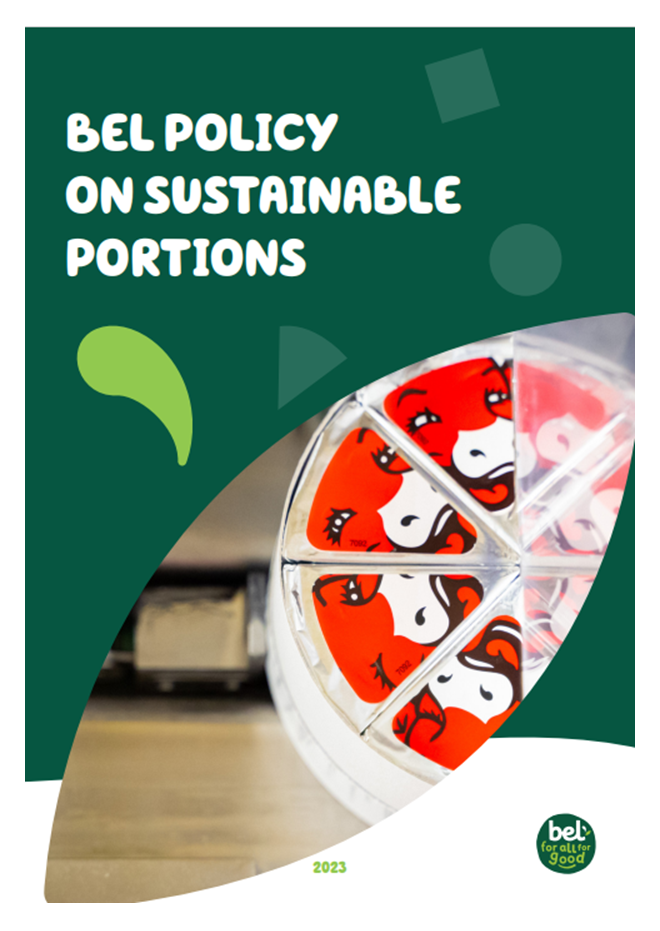
BEL POLICY ON SUSTAINABLE PORTIONS

Reconciling the benefits of portions with reducing the impact of packaging

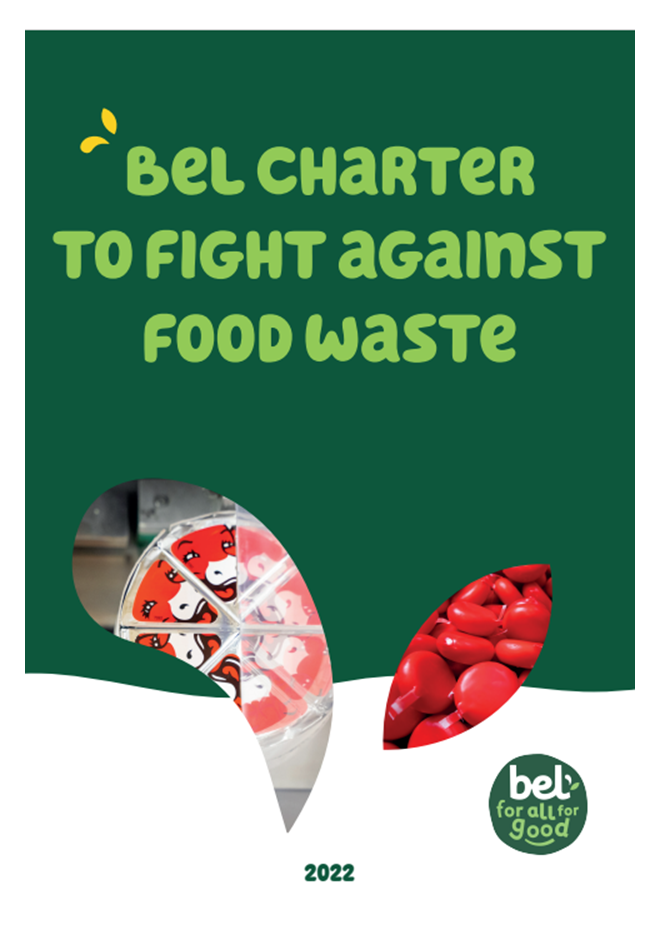
BEL CHARTER TO FIGHT FOOD WASTE

Stop food waste: a challenge from farm to FORK