Eco-friendly packaging

PACKAGING: LEADING THE WAY FOR A MORE CIRCULAR FUTURE
Although packaging accounts for only 5% of the Group's carbon footprint, we’re committed to minimizing their impact by embracing an eco-design approach throughout the product lifecycle. It’s all about striking the right balance between the numerous benefits of individual servings and reducing the impact of our packaging.

RETHINKING PACKAGING FOR A CIRCULAR ECONOMY

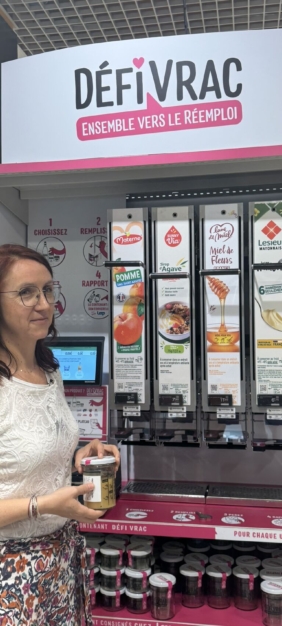
Committed to eco-design for several years, the Bel Group integrates its packaging into a circular approach, from creation to end-of-life. As a member of the Consumer Goods Forum’s Plastic Waste Coalition since 2020, we apply the 10 golden design rules to limit over-packaging, reduce empty space, and improve recyclability. Powered by our 5R strategy (Refuse, Reduce, Reuse, Restore, Recycle) we are committed to avoid all unnecessary packaging, reducing packaging material, prioritizing renewable or recycled resources where relevant, and improving recyclability.This is reflected in concrete actions, such as the new lightweight cap on our Gogo squeeZ® pouches, reducing plastic use by 40%, and the development of reusable or bulk alternatives to minimize reliance on single-use packaging.

MATERIAL CHOICES TO REDUCE PACKAGING IMPACT

To reduce our use of plastic and aluminum, we are exploring and scaling alternative materials that do not compete with food uses, such as paper sourced from renewable and certified forests. This approach contributes to lowering our overall footprint and preserving natural resources.

In practice, this means focusing on:

  • using paper and cardboard primarily made from recycled fibers, and for remaining needs, certified virgin fibers from responsibly managed forests, to limit deforestation risks,
  • sourcing aluminum in line with Aluminium Stewardship Initiative (ASI) certification standards, and progressively integrating lower-carbon options,
  • increasing the use of recycled plastic to reduce reliance on virgin fossil-based materials.
BABYBEL® PAPER PACKAGING: SCALING A MAJOR INDUSTRIAL SHIFT

Aligned with our mission to offer products that combine nutrition, enjoyment and accessibility, we integrate the reduction of environmental footprint across our value chain, from ingredient sourcing and logistics to industrial processes and packaging.

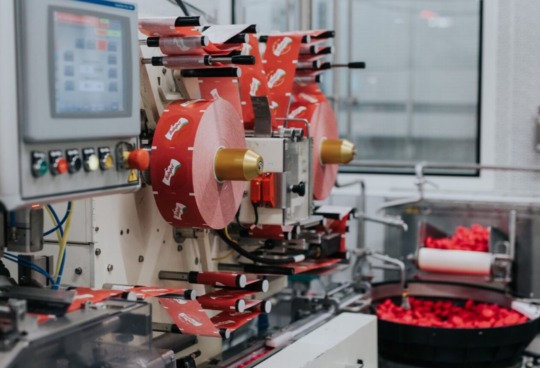
Our iconic global brand, Babybel®, plays a central role in this transformation. Across its 5 production sites and 50 markets, the transition towards paper-based packaging sourced from certified materials reflects a major evolution in how we design and deploy packaging solutions, contributing to our broader work on improving recyclability.

PORTIONS KIRI® : ÉVOLUER VERS DES SOLUTIONS À BASE DE PAPIER

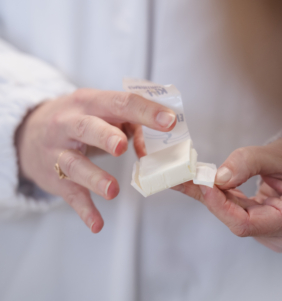
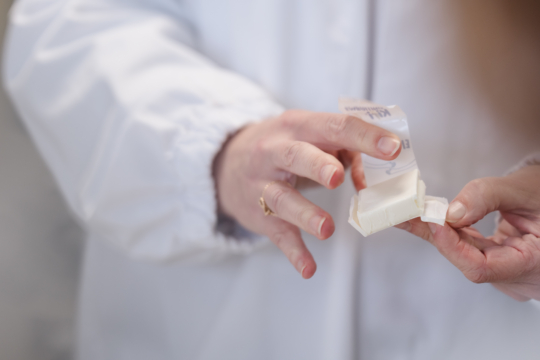
We are revolutionizing Kiri® packaging by replacing aluminum with recyclable paper. This new packaging, currently in the testing phase to assess consumer acceptance, was designed at our Vendôme center and produced at the Sablé-sur-Sarthe factory on a specially equipped line. After several years of development, we have created packaging that perfectly preserves the taste and nutritional qualities of the product, while ensuring optimal food safety and easy opening, especially suitable for children.

IMPROVING PACKAGING COLLECTION AND RECYCLING

Our approach focuses on improving the end-of-life of packaging by supporting sorting practices and contributing to more effective collection and recovery systems.

We support the development of recycling systems in the countries where the Group operates, in particular through Extended Producer Responsibility (EPR) schemes and collaborations aimed at enhancing collection, sorting and recovery.

In 2026, the Group joined the European Re-ALU platform, a cross-industry initiative bringing together stakeholders across the aluminium packaging value chain to improve the collection, sorting and recycling of small aluminium formats, such as foils, lids and wraps.

We are also involved in national initiatives on aluminium recycling or EPR development, including CELAA (France), AREME (Belgium and Luxembourg), COAALI (Spain) and AIRE (Morocco), which contribute to the development of local recycling solutions.

RESEARCH, INNOVATION, DEVELOPMENT

THE VENDÔME GLOBAL RID CENTER AT THE FOREFRONT OF FOOD AND ENVIRONMENTAL TRANSITIONS